
Hypnosis consultations for Anger Management
Words that go too far with the kids after a day of holding it together at the office. The honk that turns into road rage on the 40. The slammed door, then regret, and the promise that "it's the last time."
If this cycle sounds familiar, here's the good news: the problem isn't your anger, it's managing it, and that's a skill you can learn.
Our hypnotherapists support you across Quebec, in person or online, to catch the rise earlier, act before the point of no return, and defuse whatever lights the fuse.


Anger Is a Messenger
The Problem Isn't Anger — It's a Messenger That Breaks Things
Anger is a normal, useful emotion: it signals a crossed boundary, an injustice, a need being trampled — as highlighted by Quebec's public mental health resources, which present it as a healthy reaction where management makes all the difference [MSSS — Gouvernement du Québec].
The goal is therefore never to get rid of your anger: without it, no one would defend their limits. But to regulate it: hear the message, choose the response.
And often anger is hiding something else: it's the visible tip of an iceberg — underneath sits fatigue, the hurt of being ignored, helplessness, fear. As long as you only work on the lid, the pot keeps heating. For the full mechanism (the iceberg, the point of no return, the shame-and-tension loop), read our full guide to anger management.
Our Approach: Acting Before the Point of No Return
The whole strategy fits in one sentence: past a certain threshold, the rational brain switches off — "calm down" stops working, and regret always arrives too late.
So you need to act before that point, while choice still exists. Usually over three to six sessions:
- Lengthening the fuse — learning to detect your own rising signals (heat, a clenched jaw, your voice) earlier and earlier.
- Installing a pause — a step-back protocol (slow breathing, a gesture, a key phrase) anchored in session and rehearsed in imagery using your own real scenes, until it becomes faster than the explosion.
- Defusing your triggers — disrespect, being ignored, injustice: these disproportionate triggers are wired to your history, and we rewire them with the resources you have today.
- Releasing what's built up, safely.
- Learning effective anger — calmly stating a limit achieves more than shouting ever will (see Self-Confidence).
Self-hypnosis becomes your everyday tool.
Video transcript
Hypnosis is a very interesting tool to better manage one's emotions, and especially anger. In fact, few clients come directly to specifically address their anger. One might wonder why angry people don't necessarily come for counseling. On the other hand, many clients come for sleep disorders, anxiety disorders, and during the hypnosis session, emotions arise, such as anger. That is to say that the state of hypnosis, used for another issue, leads the person to take a step back on themselves, on their life, to make connections between their discomfort and present or past situations. Here are some typical cases of anger: - Families where the nice girl or boy has suffered frustrations, humiliations, or has made efforts, for years, to smooth out the edges in family conflicts, forgetting herself or himself in the process.
- Work environments where, I do my job well without complaining, while even helping others, then get my ideas stolen; or I am used as a prop by a colleague or a more ambitious boss. - A separation where I realize that I have been very good to someone who has taken advantage of me... - The cases are multiple and quite frequent. Oh, no doubt that this anger would have come out at another time and with someone else. But the opening that the state of hypnosis provides certainly facilitates this. I say “facilitates” because for me, it’s a good thing that emotions arise, especially anger, which is a warning signal in the face of aggressions, disrespect, injustice or to reveal my frustrations. So now that this anger is there, how can hypnosis help deal with it?
There are several advantages in hypnosis for managing emotions: First of all, it’s a gentle technique, where we work with symbols, stories and metaphors. And, in most cases, it’s enough. Because under hypnosis, our brain remarkably understands the 2nd or 3rd degree, as well as the messages in the stories. So there's no need to go and rehash the past. Sometimes I don't even really know why the client is angry. But the work gets done and the client feels relieved. In hypnosis, we can also help our clients dissociate themselves from their emotions, as if they were watching themselves in a movie, or as if they were watching their anger from the outside, by transforming it into an object. Here again, we avoid going back into the past, or into too much stress.
For instance, there is a classic technique where the client visualizes his problem as a rock in the middle of his path, and he will choose how he wants to get rid of it. You may be skeptical: how can mentally destroying a rock help to solve a problem? Well, our mind is probably much more intelligent than we think. In any case, what’s fascinating is that the person often comes out feeling lighter and calmer. Sometimes, when something works, you just have to accept that you don't need to understand everything... So getting back to anger. For people who have denied or repressed their anger for years, especially, and even more so if for them being angry is "wrong", feeling anger rising up can be disturbing.
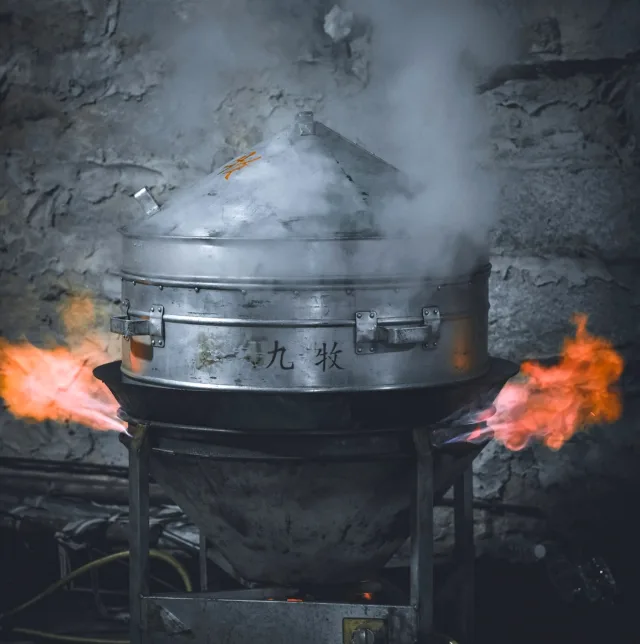
These people run the risk of screwing the lid back on the pressure cooker for another round, which can mean having an even bigger problem to deal with a few months or years later. Hence the interest of hypnosis, where the person can work at their own pace, in a way that’s best for them. The pressure cooker is actually a very interesting symbol for anger: What’s the intensity of the heat underneath? What’s the size of the cooker, the thickness of the walls... This is typically the kind of image we can work with, and under hypnosis, our minds understand metaphors very, very well. Hypnosis is still often misunderstood, or limited to entertainment or smoking cessation. But in fact, it’s useful in many areas.
And managing emotions is a particularly fascinating topic for hypnosis. If you have anger, sadness, fears... that are bothering you in your life, the team of hypnotherapists at Solutions Hypnose is there to help you. Either in person, near you, or by video, which also works very well. So make an appointment now to create the life you desire through hypnosis! See you soon.
Hypnotherapy is a complementary form of support and does not replace medical advice, diagnosis, or treatment. If you have any concerns about your health, please consult a physician first.
The Kinds of Anger We're Asked About Most in Quebec
- Shouting at the kids — then feeling guilty all evening. A classic among exhausted parents: eight hours of "keeping it professional," traffic, dinner to make — and the full pressure cooker overflows onto the smallest people, simply because they're there. This responds very well to the work, and quickly: the first outburst-free dinners often arrive within two weeks.
- Road rage. The Turcot interchange at 5pm, the 40 on a Friday, the car that cuts you off in the slush: driving combines helplessness, anonymity, and a pressure cooker that's already full. It's also the best training ground — predictable triggers, daily opportunities, measurable progress.
- "Keeping it inside" — then exploding at home. You swallow it at the office, you absorb it around extended family, and the valve always picks the wrong moment and the wrong person. The work acts on both ends: releasing tension throughout the day, and reclaiming the right to say things where they actually happen.
- Inherited anger. "I'm like my father" — this pattern isn't fate: it's something learned, and what's learned can be unlearned. Breaking a family cycle is one of the best reasons to seek this kind of support.
- Storms of childhood and teenage anger. The "rising storm" is worked through games and stories in children, and through concrete tools with teens (see Hypnosis for Children and Hypno-Coaching for Teens) — and often, working on a parent's anger calms a child's anger too.
The Red Line: When Anger Becomes Violence
Let's say this plainly, because it's a matter of safety. If your anger turns into actions — hitting, pushing, breaking things, threatening someone — or if the people around you are afraid of you, the situation goes beyond our helping-relationship scope: it calls for specialized help first. In Quebec, organizations specifically support people who want to stop violent behavior — the À cœur d'homme network brings these resources together [acoeurdhomme.com] — and taking that step is difficult and deeply respectable. Our support can then, alongside that, work on regulation.
And if you're reading this page because you're afraid of someone else's anger: your safety comes first — SOS violence conjugale is available 24/7, in complete confidentiality [sosviolenceconjugale.ca].
When to See a Doctor or Psychologist First
Our usual honesty: see a doctor or psychologist (a member of the OPQ) first if:
- anger has become uncontrollable in every context,
- you notice a sudden and marked change in personality (new, unexplained irritability deserves a medical opinion),
- substance use is fueling the outbursts,
- or the anger is tied to a traumatic experience.
We do this screening at the very first contact and will refer you honestly.
What our clients say

« The virtual session helped me a lot with my anger and sadness management. Nassim is wonderful, she's gentle and calm, I highly recommend her. Thank you!! »
Odette, client of Nassim Zafar
Ready to Lengthen the Fuse?
In Office or Online Across Canada
Offices in Montreal, Gatineau, Sherbrooke, Montérégie…
And if you live far away or elsewhere in the world, online sessions work very well. Evening slots available.
All areas
 Annie Mayrand
Gatineau - Cumberland (ON)
👤
🧑🎓
🚭
❤️
💻
Annie Mayrand
Gatineau - Cumberland (ON)
👤
🧑🎓
🚭
❤️
💻
 Christian Rocher
Beloeil
👤
🧑🎓
👶
🚭
❤️
💻
Christian Rocher
Beloeil
👤
🧑🎓
👶
🚭
❤️
💻
 David Veilleux
Montréal - Anjou
👤
🧑🎓
🚭
❤️
🤰
💻
David Veilleux
Montréal - Anjou
👤
🧑🎓
🚭
❤️
🤰
💻
 Florence Aton
Sutton
👤
🚭
❤️
💻
Florence Aton
Sutton
👤
🚭
❤️
💻
 Jessica Reid
Sherbrooke
👤
🚭
💻
Jessica Reid
Sherbrooke
👤
🚭
💻
 Julie Rocque
Montréal - Jean-Talon
👤
🧑🎓
👶
🚭
❤️
🤰
💻
Julie Rocque
Montréal - Jean-Talon
👤
🧑🎓
👶
🚭
❤️
🤰
💻
 Nuria Pérez de León
Montréal - Rosemont - Saint-Lambert
👤
🧑🎓
💻
Nuria Pérez de León
Montréal - Rosemont - Saint-Lambert
👤
🧑🎓
💻
 Romain Rastoin
Bromont
👤
🧑🎓
🚭
❤️
💻
Romain Rastoin
Bromont
👤
🧑🎓
🚭
❤️
💻
 Réjeanne LeBlanc
La Prairie
👤
🧑🎓
👶
💻
Réjeanne LeBlanc
La Prairie
👤
🧑🎓
👶
💻
Frequently asked questions about hypnosis for anger management
No — you're a parent whose pressure cooker is full, and the shouting is a symptom of that, not proof of a lack of love (the guilt you feel proves the opposite). The work acts fast on this: catching the rise before it overflows, a three-minute pause, and releasing the day's built-up tension somewhere other than on the kids. If actions have crossed a line or threaten to, specialized help comes first — and that step is respectable.
Because regret arrives after the point of no return, when the rational brain switches back on — during the rise itself, it was switched off: that's physiological, not a lack of willpower. The answer isn't to regret harder, it's to act earlier: catching the first signals and triggering your pause while choice still exists. That's exactly what we train.
Very well — and driving is even the best training ground: predictable triggers (traffic, slush, the driver who doesn't signal), daily opportunities, measurable progress. We install the step-back protocol behind the wheel, defuse the helplessness trigger, and the car becomes a place where you can listen to your podcast in peace again.
No, it's the other side of the same problem: bottled-up anger becomes rumination, resentment, sarcasm, physical tension — and it costs you your limits. The work is symmetrical: reclaiming the right to be angry, then learning calm expression. Between exploding and enduring, there's a third path — and it's the only one that works.
You can't do the work for someone else — buy-in is the condition for any support to work. What you can do: calmly name the impact of their anger on you, outside of a crisis moment, and set your own limits. And one important thing: if their anger frightens you or has gone beyond words, your safety comes before their process — SOS violence conjugale is there 24/7, in complete confidentiality.
It depends on your group plan. Our practitioners issue receipts (counselling, naturotherapy, or hypnotherapy depending on their affiliation), but not every insurer accepts them: check your policy before your first session.
To go further
- Self-Confidence: stating a limit calmly rather than shouting it.
- Hypnosis for Children and Hypno-Coaching for Teens: the youngest storms.
We are neither doctors, psychologists, nor psychotherapists. Our services are rooted in helping relationships and well-being: they do not constitute treatment or psychotherapy (a regulated act in Quebec), and never replace medical or psychological care. If your anger turns into violent actions or frightens the people around you, specialized help is the priority.

Page written by Jimmy Gaudreault
hypnotherapist and NLP coach
partner at Solutions Hypnose.
English version reviewed by David Veilleux
Updated .