
Hypnosis consultations for Artists
There is an injustice unique to artists: hundreds of hours of work can come down to three minutes on stage — and that is exactly when the body chooses to tremble.
Quebec is a land of the stage (theatre, music, comedy, circus, dance), and our practitioners support the people who make it happen: paralysing stage fright, an audition that makes you lose your abilities, a memory blank mid-show, writer's block that won't lift, a bad show that haunts the next ones.
A local edge: several of our practitioners are professional artists themselves — they know from experience what the wings feel like ten minutes before curtain up.


Stage fright, performing, auditions, creative blocks…
Stage fright is not the enemy — paralysing stage fright is
First, a crucial distinction: stage fright is normal, universal and useful. The leading French authority on artists' health confirms it — that activation before performing is your body mobilising for a moment that matters (Médecine des Arts).
An artist with no stage fright at all often performs flat: well-dosed, activation gives you presence and intensity.
The problem starts when stage fright switches sides: shaking hands, a tight throat, memory going blank, weeks of dread before the event, opportunities turned down to avoid getting on stage.
This is the same activation-zone logic as in Sports Performance: too low and you're flat, too high and you're overwhelmed. The work never removes stage fright — it brings it back down into the zone where it becomes fuel again.
For the full mechanics, see our full guide on solutionshypnose.com.
What hypnosis can do for artists (professional and amateur)
Five concrete levers
- Coming back down into the zone.
Calm anchors you can call on backstage (a gesture, a breath, a word, installed so they hold up in real intensity), a pre-show routine that replaces the spiral, and regulating the body: hands, breath, voice.
- Desensitising the gaze.
The audience-as-judge gets re-trained: gradual exposure in imagination (performing for ten, a hundred, a thousand people — the brain gets used to it in session before the room), reframing the real audience (there to feel something, not to judge), and defusing founding scenes — the harsh teacher, the catastrophic audition — revisited with the resources you have today so they stop coming on stage with you. - Mentally rehearsing.
We rehearse in imagination the walk on stage, the difficult passage, and handling the unexpected (a broken string, a line that trips you up) crossed calmly — they lose their power to cause panic. - Taming the mistake, and the recovery.
A wrong note has never killed a show; it's the panic afterwards that does. We install the recovery: getting through the mistake without collapsing, an immediate return to the present moment. - Reopening memory.
A memory blank is not an erasure: it is an access block under stress (see Focus & Exams). The knowledge is there, the door is jammed: we install the keys — re-access anchors, landmarks within the piece, and lowering activation to reopen the door.
When hypnosis can really help
Auditions, competitions, schools: the deadlines that matter
The audition is the cruellest stage of all: no warm audience, a jury, sometimes three minutes for years of work — and a career or admission at stake (Conservatoire, theatre, music, or circus schools).
It requires specific preparation: mental rehearsal under real conditions (the cold room, the "thank you" that cuts you off, waiting in the hallway with other candidates), managing the stakes (playing your music rather than playing your life), and the ritual of the minutes before.
Creative blocks: the blank page and the impostor
The other side of this does not play out on stage but in the studio: the blank page that drags on, the tune never finished, the project kept on hold.
Underneath, it's almost always the same things:
- perfectionism (the inner judge that censors before the first draft even exists — you cannot write with a critic sitting on your shoulder);
- artistic impostor syndrome ("real artists are other people", see our Self-Confidence page);
- and constant comparison.
The work in hypnosis focuses on:
- silencing the censor during the creation phase (create first, judge later — two stages, two states);
- reopening access to flow (that absorbed state where it just comes out, a cousin of the hypnotic state);
- repairing the creative identity worn down by rejection and criticism.
After the incident: the bad show that haunts you
A public memory blank, a disastrous show, a scathing review. And ever since, every time you go on stage the ghost of it comes with you: it's one of the most common things we work on with experienced artists. The work removes the weight from the past performance (revisited at a distance, never relived) so the next one can become a new story.
The artists who have done this all describe it the same way: the ghost no longer gets on stage with them.
The artist's body: a precaution worth taking
More on some artistic-performance-related subjects
- Inner listening and audiation: hearing the music before you play it.
- Hypnosis for musicians: the article dedicated to musicians on stage.
What our clients say
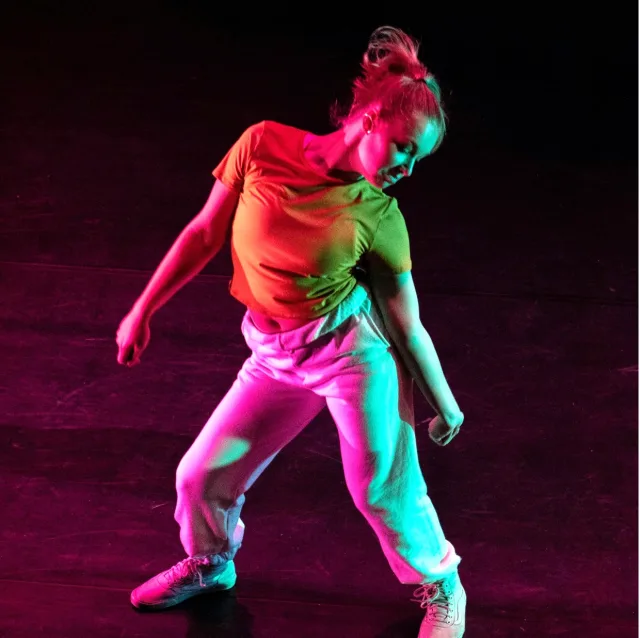
« At the end of the last school year, I had auditions for some famous dance and musical theater schools. I couldn't sleep at night anymore, had trouble concentrating during rehearsals, and above all I no longer dared to really give it my all for fear of getting hurt, fear of falling... In a few sessions, I managed to calm my stress, better manage my performance anxiety to stay focused purely on the moment... and rediscover the joy of dancing! »
Anais
Find a Hypnotherapist for Artistic Performance near you
In Office or Online Across Canada
Offices in Montreal, Gatineau, Sherbrooke, Montérégie…
And if you live far away or elsewhere in the world, online sessions work very well. Evening slots available.
All areas
 Annie Mayrand
Gatineau - Cumberland (ON)
👤
🧑🎓
🚭
❤️
💻
Annie Mayrand
Gatineau - Cumberland (ON)
👤
🧑🎓
🚭
❤️
💻
 Christian Rocher
Beloeil
👤
🧑🎓
👶
🚭
❤️
💻
Christian Rocher
Beloeil
👤
🧑🎓
👶
🚭
❤️
💻
 David Veilleux
Montréal - Anjou
👤
🧑🎓
🚭
❤️
🤰
💻
David Veilleux
Montréal - Anjou
👤
🧑🎓
🚭
❤️
🤰
💻
 Florence Aton
Sutton
👤
🚭
❤️
💻
Florence Aton
Sutton
👤
🚭
❤️
💻
 Jessica Reid
Sherbrooke
👤
🚭
💻
Jessica Reid
Sherbrooke
👤
🚭
💻
 Julie Rocque
Montréal - Jean-Talon
👤
🧑🎓
👶
🚭
❤️
🤰
💻
Julie Rocque
Montréal - Jean-Talon
👤
🧑🎓
👶
🚭
❤️
🤰
💻
 Nuria Pérez de León
Montréal - Rosemont - Saint-Lambert
👤
🧑🎓
💻
Nuria Pérez de León
Montréal - Rosemont - Saint-Lambert
👤
🧑🎓
💻
 Romain Rastoin
Bromont
👤
🧑🎓
🚭
❤️
💻
Romain Rastoin
Bromont
👤
🧑🎓
🚭
❤️
💻
 Réjeanne LeBlanc
La Prairie
👤
🧑🎓
👶
💻
Réjeanne LeBlanc
La Prairie
👤
🧑🎓
👶
💻
Frequently asked questions about Hypnosis consultations for Artists
No — and that is not the goal: stage fright is the fuel behind stage presence, and a completely cold artist often performs flat. The work brings activation back into the useful zone: a pounding heart becomes intensity instead of paralysis. Our artist clients all describe it the same way: "I still get stage fright, but now it works for me."
Several of them are on it: our team includes practitioners who are professional artists themselves and who know from experience what the wings feel like ten minutes before curtain up, what an audition panel is like, or a review that stings — see David Veilleux and Daby Touré. That experience changes the support: you will not have to explain what it feels like.
Yes, in two stages: removing the weight from the incident (revisited at a distance, never relived — it stops coming on stage with you), then rebuilding memory confidence. Understanding that the blank was an access block under stress, not a failure of your memory, setting landmarks within the pieces, and anchoring re-access. Most artists end up replaying the "cursed" piece — it's often the most moving session of all.
Yes, it is a classic format: three to five sessions are enough to install the essentials (pre-audition anchor, mental rehearsal under real conditions, managing the stakes), with self-hypnosis practice in between. Starting earlier is still ideal, but six weeks well used changes an audition.
These medications exist and are entirely a matter of prescription and medical follow-up: we give no opinion on that, talk to your doctor. What hypnosis offers is different: a substance-free approach that works on the root cause (the inner tribunal, founding scenes), not just the symptoms — and the two approaches are not mutually exclusive.
Your stage fright doesn't know your status, and neither does your enjoyment: the amateur who trembles at a choir concert or a dance show deserves the same work as a professional, for the same reason — hours of passion ruined by three minutes of panic. The process is often shorter (amateur stage fright rarely has a career riding on it as well), and the result changes everything: finally playing for the pleasure you came for in the first place.
We are not doctors, psychologists, or psychotherapists. Our services fall under relational support and well-being: they do not constitute care or psychotherapy (a regulated act in Quebec), and never replace medical care. Persistent physical symptoms (voice, tension) are a matter for a doctor; any medication question, for your doctor.

Page written by Daby Touré
hypnotherapist
partner at Solutions Hypnose.
English version reviewed by David Veilleux
Updated .