
Hypnosis for Children in Montreal
2 hypnotherapists see children in English: in Petite-Patrie, and in La Prairie on the South Shore, and by video.
Fears, sleep, bedwetting, big emotions, school worries: sessions built on play and imagination, with parents as partners.


Growing up in Montreal
Daycare or the CPE first thing in the morning, school, after-school care, the metro at rush hour, Saturday activities, often two languages between home and school: a Montreal child lives at a busy pace. Most keep up without trouble. But when a fear, a worry or an emotion takes up too much room, the whole family feels it.
Many parents describe the same thing: they have tried everything, rewards, talks, patience, and the difficulty comes back every evening or every morning. They are looking for a gentle approach their child will accept.
What brings parents to see us
- Fears and nightmares: fear of the dark, of dogs, of storms, of sleeping alone.
- Sleep: endless bedtimes, waking up at night, rituals that never end.
- Bedwetting, after seeing the doctor to rule out any physical cause.
- School and separation worries: tears at morning drop-off, the knot in the stomach on Sunday evening.
- Self-confidence: the child who does not dare raise their hand or keeps saying "I'm no good".
- Anger and big emotions, and big changes: a new baby, a move, parents separating.
What hypnosis can do for your child
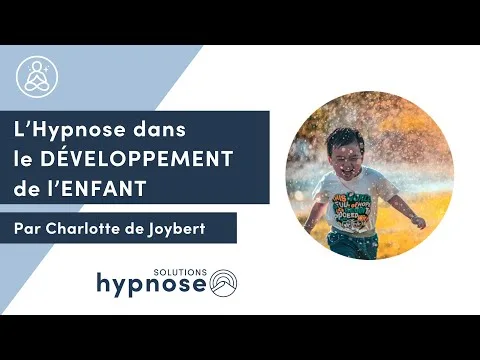
Video transcript
Bonjour je suis Charlotte de Joybert hypnothérapeute et sophrologue. J'ai toujours été au service des autres en plaçant l'humain au centre de mes préoccupations. J'accompagne les adultes et les enfants sur des sujets comme la gestion de l'anxiété ou de certaines peurs, des changements de comportement comme pour l'alimentation et le tabac, l'image de soi et la confiance en soi. J'aide également les femmes dans leur grossesse et leur post-partum mais également lors de leur parcours PMA.
La sophrologie et l'hypnose sont de magnifiques techniques qui font partie de la famille des thérapies brèves qui permettent de se sentir mieux rapidement. Ces techniques peuvent également accompagner le développement de l'enfant, de sa petite enfance à l'adolescence. Alors je rencontre des enfants de tous les âges. Ça peut aller de cinq à six ans, tout dépend de la maturité de l'enfant et de l'objectif thérapeutique, jusqu'à dix-sept / dix-huit ans pour les adolescents.
Souvent, les enfants viennent pour des problématiques différentes en fonction des âges : ça peut être l'énurésie, les troubles du sommeil, les problèmes de confiance en soi, aussi la gestion du trouble de l'anxiété qui est un thème qu'on retrouve à tous les âges. Je me souviens d'un petit garçon de huit ans qui avait des difficultés avec sa nouvelle maîtresse, qui lui ont provoqué des angoisses au point d'avoir envie de vomir, sachant qu'en plus il était émétophobe : la peur de vomir.
Il avait perdu confiance en lui et cela impactait autant à l'école que dans ses loisirs. Il ne voulait plus aller à l'école ni aller à ses entraînements. Au fil des séances, les choses sont rentrées dans l'ordre, nous avons trouvé des exercices de respiration qui étaient associés à des mouvements pour se sentir confiant et protégé. Et ensuite nous avons modifié sa perception de l'école afin que l'envie de vomir disparaisse totalement.
Tout à fait, l'approche et les techniques utilisées ne sont pas les mêmes si l'enfant a six, douze ou seize ans. Pour les jeunes, l'état d'hypnose est pour eux très facile, il peut même se pratiquer les yeux ouverts, tout en continuant de discuter avec eux : je rentre dans leur monde et les résultats sont rapides et les parents sont souvent bluffés des changements qui s'opèrent en une ou deux séances. Pour un enfant de primaire, je vais faire des séances plus courtes et j'utilise des images et des métaphores qui vont être adaptées à leur âge.
Souvent les enfants de cet âge peuvent avoir des problèmes de gestion de leurs émotions ou une problématique liée à un événement particulier qui va les faire comme régresser, ils vont par exemple ne plus vouloir dormir dans leur lit, avoir de l'énurésie, avoir des comportements différents que ce soit chez eux ou à l'école. Il s'agit alors de savoir comment ils vivent les choses, ce qui les rassure et comment faire en sorte qu'ils acceptent de changer.
Je privilégie vraiment un travail d'imagination guidée qui leur parle. Alors que pour un adolescent, je mets davantage en place un rapport de confiance et je les accompagne à mettre en place des outils pour améliorer leur estime d'eux mêmes, gagner en confiance, être maître de leurs émotions. Il s'agit alors d'utiliser la visualisation, la respiration et les affirmations positives par exemple. Et pour les adolescents ou les jeunes adultes, on peut travailler plus longuement sur des exercices de relaxation profonde, et un travail sur les croyances et les comportements.
Voilà, vous avez à présent quelques outils pour appréhender l'hypnose au prisme des besoins du développement de votre enfant. Pour plus d'informations sur l'hypnose et comment elle peut vous aider, prenez contact avec moi. Et toute l'équipe de Solutions Hypnose est là pour vous accompagner en cabinet ou par visio, cela fonctionne aussi très bien. N'hésitez pas à poser vos questions et à partager votre expérience nous aurons un plaisir à vous lire.
Et si vous avez aimé cette vidéo, n'oubliez pas de “Liker” de vous abonner pour plus de conseils. A bientôt pour une nouvelle vidéo.
Hypnotherapy is a complementary form of support and does not replace medical advice, diagnosis, or treatment. If you have any concerns about your health, please consult a physician first.
A session made for a child
No couch and no "sleep, I command you": hypnosis with a child looks like playtime. The practitioner builds a made-to-measure story with them, full of their favourite characters: the fear of the dark becomes a dragon to tame, the worry goes into an imaginary box. The child moves, draws, talks, and leaves with simple tricks they can use on their own.
Parents are partners from start to finish
You do not "send" a child to hypnosis: their wish matters. Show them the practitioner's photo and let them decide. The first meeting is held together to set the goal, and you stay informed of everything that matters: there are never secrets kept from parents.
When to see the doctor first
See your doctor or a psychologist first if you notice a sudden and lasting change in behaviour, withdrawal, a marked regression, persistent learning difficulties or significant distress. A diagnosis is a matter for the doctor, psychologist or neuropsychologist; our support can then come as a complement, with their agreement.
Our hypnotherapists for children, in English
Two members of the team see children in English: Julie Rocque in Petite-Patrie, from age 10, and, just across the river on the South Shore, Réjeanne LeBlanc in La Prairie, from age 6. Both also see teenagers, and both work by video.
Families come from all over the island and the South Shore: Notre-Dame-de-Grâce, Westmount, the Plateau, Rosemont, Villeray, Verdun, Brossard, La Prairie, Candiac and Saint-Lambert.
Regions where the network has a practitionerOther administrative regions
What our clients say
« The appointment was for my son, we really loved Ms. Leblanc's approach, she was very attentive and the session met all our expectations. I highly recommend her. »
Aicha, client of Réjeanne LeBlanc
« Great session, very inviting and warm welcome. My son felt right away in confidence with Rejeanne »
Adriana, client of Réjeanne LeBlanc
« My daughter was truly radiant and lighter! She told me everything about what she saw and we talked a lot. What I especially appreciated: Réjeanne's reassuring presence »
Geneviève, client of Réjeanne LeBlanc
« The interaction with my child was remarkable, my boy was very attentive and receptive to everything she explained to him. He remembers the techniques and tries very hard not to repeat the problem. »
Martin, client of Réjeanne LeBlanc
Where to see us with your child, in Montreal and La Prairie
Petite-Patrie, near the Beaubien and Jean-Talon metros
Rosemont–La Petite-Patrie, near rue Saint-Denis
Between the Beaubien and Jean-Talon metro stations (orange line). The exact address is sent when you book.
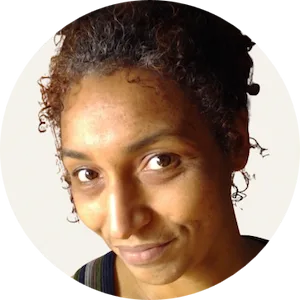 Julie Rocque: children from age 10, teenagers and adults.
Also sees clients in French.
Getting to the Petite-Patrie office:
For clients coming from La Petite-Patrie, Villeray, Rosemont, Little Italy, Mile-Ex, the Plateau-Mont-Royal or Ahuntsic. The exact address is sent when you book.
By public transit
- Beaubien or Jean-Talon metro (orange line), a few minutes' walk from the corner of Rue Saint-Denis and Rue Saint-Zotique.
- STM buses along Rue Saint-Denis.
By car
- Highway 40, exit Boulevard Saint-Laurent or Rue Saint-Denis, then south on Rue Saint-Denis. Street parking in the neighbourhood.
La Prairie
1503 chemin de Saint-Jean, suite 206, La Prairie, QC J5R 2L8
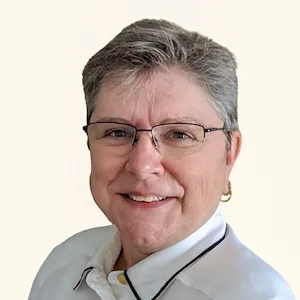 Réjeanne LeBlanc: adults, teenagers and children (6 and up).
Also sees clients in French.
Getting to the La Prairie office:
For clients coming from Candiac, Brossard, Saint-Philippe, Saint-Constant, Delson, Sainte-Catherine, Saint-Jacques-le-Mineur or Saint-Jean-sur-Richelieu.
By car
- From Montreal (~25 min): Samuel-De Champlain Bridge, Highway 15 South, then Chemin de Saint-Jean (Route 104) towards La Prairie.
- From Brossard or Candiac (~10 min): Boulevard Taschereau or Highway 15, then Chemin de Saint-Jean.
- From Saint-Jean-sur-Richelieu (~25 min): Route 104 West (Chemin de Saint-Jean) to La Prairie.
By public transit
- REM to Brossard or Panama station, then exo buses to La Prairie.
Sessions
Rates
- session of about one hour: $135, taxes included;
- first session: 1 hour to 1 hour 30 depending on the practitioner, $135 to $155, taxes included.
Each practitioner's exact rates are on their profile, under "Our Team".
Insurance receipts: RITMA or ANN (naturopathy)
Please note: receipts for helping-relationship services, the category our discipline falls under, are not accepted by every insurance plan. Check your coverage with your insurer before your first session.
Do you live far away?
Other end of the island, suburbs or a busy schedule: most of the team also sees clients by video. Online sessions get results equivalent to in-person ones, and save you the trip.
Zoom, WhatsApp or Teams, over a password-protected connection. All about video consultations.
Frequently asked questions about hypnosis for children in Montreal
From age 6 with Réjeanne LeBlanc, and from age 10 with Julie Rocque. That is when language is rich enough to follow a story and play with it. Before that, the work goes mostly through the parents, with stories and rituals to tell.
The first meeting always starts together, to set the goal. After that, it depends on the child's age: the youngest are often accompanied, older children sometimes prefer a space of their own. You stay informed of everything that matters.
Often few: children step into imagination quickly, and the work is usually shorter than with adults. The practitioner reviews progress with you after each session.
As a complement only. Diagnosis and follow-up are a matter for the doctor, psychologist or neuropsychologist. With their agreement, our support can help your child with what surrounds the difficulty: stress, self-esteem, sleep.
$135, taxes included, per session, for about one hour. We provide RITMA or ANN (naturopathy) receipts, which not every plan accepts: check with your insurer.
Yes, especially older children who are at ease in front of a screen. For a first meeting with a young child, the office is often simpler: talk it over with the practitioner.
We are not physicians, psychologists or psychotherapists. Our services fall under helping-relationship and wellbeing support: they constitute neither a diagnosis, nor treatment, nor psychotherapy (a reserved act in Quebec), and in no way replace medical or psychological care. If you are suffering psychologically, see a doctor or a psychologist — Info-Santé 811. In distress: 1-866-APPELLE (1-866-277-3553) or suicide.ca.
Page written by Julie Rocque
hypnotherapist
partner at Solutions Hypnose.
English version reviewed by David Veilleux
Published .